The Special Tax on Non-Reusable Plastic Packaging is a tax that still raises many questions for companies. This is especially true for businesses that manufacture, import or acquire packaged products from other European Union countries.
In practice, many companies refer to it as the plastic tax. However, managing this tax does not simply mean calculating an amount due. It also requires companies to review their transactions and, where applicable, file Form 592 with the Spanish Tax Agency.
At LEIALTA, we explain what the Special Tax on Non-Reusable Plastic Packaging is, who must declare it, which products are affected and when Form 592 must be submitted, among other key points.
What is the Special Tax on Non-Reusable Plastic Packaging?
Index of contents
The Special Tax on Non-Reusable Plastic Packaging is an indirect tax that applies to the use in Spain of non-reusable packaging containing plastic.
Its purpose is to reduce waste generated from non-reusable plastic packaging and encourage the use of recycled materials. However, from a business perspective, it is important to understand that this is not only an environmental measure. It is a tax obligation with a direct impact on purchases, imports, manufacturing, invoicing, documentation and tax compliance.
The tax may apply to empty packaging, as well as to packaging that is already used to contain, protect, handle, distribute or present goods. Therefore, it is not only relevant for companies that manufacture packaging. It should also be reviewed by companies that import packaged products or acquire goods within the European Union.
In practice, a company may be affected even when plastic is not the main product of its business activity. It may be enough for non-reusable plastic packaging or plastic components to be involved in its operations.
Which products are affected by the plastic tax?
The tax applies to certain products that contain plastic and fall within the objective scope of the tax.
In general, the following products or situations may be affected:
| Product or situation | Could it be affected? | What should be reviewed |
|---|---|---|
| Non-reusable packaging containing plastic | Yes | Whether it contains non-recycled plastic and is used in Spain. |
| Empty plastic packaging | Yes | Whether it is manufactured, imported or acquired within the EU. |
| Packaged products entering Spain | Yes | Whether the packaging contains non-recycled plastic. |
| Transport packaging containing plastic | Yes | Whether it is used to contain, protect, handle, distribute or present goods. |
| Preforms or thermoplastic sheets | Yes | Whether they are intended to manufacture non-reusable packaging. |
| Caps, closures or presentation elements | Yes | Whether they contain plastic and allow packaging to be closed, marketed or presented. |
| Reusable packaging | In principle, no | Its reusable nature must be properly evidenced. |
| Recycled plastic | It may reduce the taxable base | It must be correctly certified. |
This is where one of the most common questions arises: what does the term “packaging” mean?
For practical purposes, companies should not only think of bottles, bags or containers visible to the final consumer. Industrial packaging, transport elements and wrapping materials may also be considered packaging.
Therefore, before ruling out the application of the tax, it is advisable to analyse how the product is used within the manufacturing, distribution or commercialisation chain.
Who is required to pay or declare the plastic tax?
The obligation to pay or declare the plastic tax depends on the type of transaction carried out by the company. In general, the main operators affected are:
- Manufacturer. An operator that manufactures in Spain products included within the scope of the tax. In this case, the main obligation is to file Form 592, pay the tax due where applicable and keep stock accounting records.
- Intra-Community acquirer. This is usually a company that purchases products subject to the tax from another EU Member State in order to introduce them into Spain. These companies must register where applicable, file Form 592 and keep a stock register when required.
- Importer. An operator that introduces into Spain products from outside the EU. For importers, the tax is settled at customs and not through Form 592.
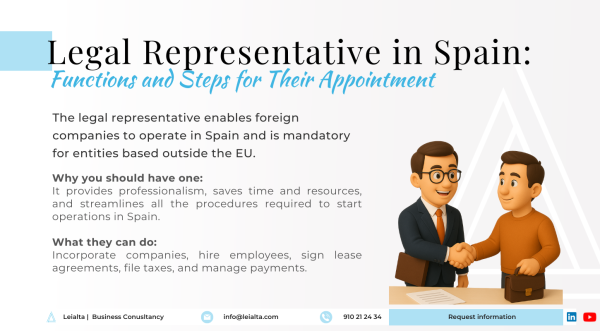
- Company not established in Spain. For example, a company that carries out intra-Community acquisitions or imports subject to the tax. These companies may be required to appoint a representative before the Spanish Tax Administration.
- Acquirer in Spanish territory. A company that purchases products for which the tax has already been paid. This type of operator may need information in an invoice or certificate and, in certain cases, may request a refund.
For international groups and foreign companies operating in Spain, it is especially important to identify which situation applies. For example, a company may not manufacture packaging but may still be affected if it introduces packaged products or packaging acquired in another country into Spanish territory.
In addition, intra-Community acquirers may be exempt from registration when the total weight of non-recycled plastic contained in their intra-Community acquisitions does not exceed 5 kilograms in a calendar month. However, this exception should be reviewed carefully, considering both acquisitions already made and those expected during that month.
Registration for the plastic tax in Spain: when is it required?
In addition to calculating and declaring the tax, some companies must register in the territorial register for the Special Tax on Non-Reusable Plastic Packaging before carrying out certain transactions.
This obligation mainly affects manufacturers and intra-Community acquirers of products included within the scope of the tax. In the case of foreign companies or companies not established in Spain, it may also be necessary to review whether they must obtain a Spanish tax identification number, appoint a tax representative and coordinate registration with the rest of their obligations before the Spanish Tax Agency.
Registration allows the company to obtain the plastic identification code, known as the CIP, which identifies the company within the relevant register. This code may be required to correctly manage obligations linked to the tax, such as filing Form 592 or complying with the required books and records.
Therefore, before manufacturing, making intra-Community acquisitions or introducing products subject to the tax into Spain, companies should review whether registration is required, what documentation is needed and who will act as the point of contact with the Spanish Tax Administration.
Which transactions are subject to the tax?
The plastic tax may apply when one of the following transactions takes place in relation to the manufacture, import or acquisition of non-reusable plastic packaging.
Manufacturing
For the purposes of the plastic tax, manufacturing exists when products included within the objective scope of the tax are produced in Spanish territory.
In these cases, the manufacturer may be required to file Form 592, keep stock accounting records and charge the tax on the invoice when selling or delivering the manufactured products.
Importation
Importation takes place when products subject to the tax are introduced from outside the European Union.
In this case, the importer does not file Form 592 for that transaction, since the tax is settled at customs. Even so, the information declared must be reviewed carefully, especially the kilograms of non-recycled plastic and any applicable exemptions.
Intra-Community acquisition
An intra-Community acquisition takes place when a company obtains the right to dispose of products subject to the tax that are transported from another EU Member State to Spain.
This is one of the scenarios that generates the most errors, because many companies associate the tax only with manufacturers or importers. However, a company that purchases packaging or packaged products from another EU country may become a taxpayer.
Irregular holding
The possession, commercialisation, transport or use in Spain of products subject to the tax may also be taxable when their manufacture, import, intra-Community acquisition or acquisition in Spanish territory cannot be evidenced.
In practical terms, this reinforces the importance of keeping sufficient documentation on the origin, composition and tax treatment of the products.
How is the tax on plastic packaging calculated?
The tax is calculated on the amount of non-recycled plastic contained in the products subject to the tax. The general formula is:
Kilograms of non-recycled plastic x 0.45 euros = tax due
For example, if a company introduces into Spain packaging containing 1,000 kg of plastic and can prove that 30% is recycled plastic, the taxable base will be 700 kg of non-recycled plastic.
In that case: 700 kg x 0.45 euros = 315 euros.
The key is not only to know the total weight of the packaging. It is also necessary to distinguish which part corresponds to recycled plastic and which part corresponds to non-recycled plastic.
In addition, the recycled plastic content must be duly evidenced. It is not enough for the supplier to state in general terms that the product contains recycled material. The company must have valid documentation to justify the amount of recycled plastic and transfer that information to the calculation of the taxable base.
Form 592: what it is and when it is filed
Form 592 is the self-assessment return for the Special Tax on Non-Reusable Plastic Packaging.
The purpose of AEAT Form 592 is to declare the tax accrued by manufacturers and intra-Community acquirers of products included within the objective scope of the tax.
In general, the following parties are required to file Form 592:
- Manufacturers of products subject to the tax.
- Intra-Community acquirers of products subject to the tax.
By contrast, importers do not file Form 592 for imports, because the tax is settled at customs.
When is Form 592 filed?
The general deadline to file Form 592 and, where applicable, pay the tax debt is as follows:
| Situation | Deadline |
|---|---|
| Without direct debit | From the 1st to the 20th day of the month following the end of the relevant settlement period |
| With direct debit | From the 1st to the 15th day of the month following the end of the relevant settlement period |
As a rule, the settlement period coincides with the calendar quarter. However, if the company has a monthly VAT settlement period, the settlement period for this tax will also be monthly.
What information should the company review before filing Form 592?
Before preparing the form, companies should review:
- Which products are included within the scope of the tax.
- Which transactions were carried out during the period.
- The kilograms of non-recycled plastic.
- The documentation proving the recycled content.
- Any possible exemptions or deductions.
- Product movements outside Spain.
- Information received from suppliers.
- Consistency between invoices, certificates, books and records.
Form 592 should not be treated as an isolated procedure. In many cases, the risk lies in the prior information used to prepare the self-assessment return.
Recent DGT criteria and changes to consider
Although the tax has been in force since 2023, its practical application continues to raise questions. The Spanish Directorate-General for Taxation has been establishing relevant criteria that affect common situations in many companies.
Rather than explaining every detail here, we recommend reviewing our specific alert on these criteria, where we analyse them in depth.
By way of summary, these are some of the key points to consider:
- Intra-Community purchases may generate formal obligations, such as Form 592, even when no tax is payable.
- The movement of packaging outside Spain requires correct documentary evidence to apply exemptions or refunds.
- Waste management does not, by itself, allow the tax to be recovered if the packaging has already been used in Spain.
- To treat packaging as reusable, it must be possible to justify this with documentation.
- Recycled plastic must be evidenced in kilograms, not only as a percentage.
If any of these points affect your operations, it is advisable to review the full alert to avoid errors in the application of the tax.
Exemptions, refunds and special cases
The regulations provide for different cases in which the tax may not apply, may be reduced or may be recovered. However, these cases require particular caution because they usually depend on the destination of the product, its documentation and the moment when the transaction takes place.
Cases of non-taxation
Among other cases, there may be non-taxation when the products are destroyed or become unsuitable for use before the tax accrues, when they are manufactured to be sent directly outside Spain, or when they consist of paints, inks, lacquers and adhesives designed to be incorporated into products within the objective scope of the tax.
Exemptions
Exemptions may apply to certain products intended for medicines, medical devices, food for special medical purposes, infant formula for hospital use or hazardous healthcare waste.
There may also be exemptions for certain intra-Community acquisitions or imports when the total weight of non-recycled plastic does not exceed 5 kg in one month.
In any case, the exemption must be correctly documented. If it depends on the destination of the product, that destination must be evidenced and the documentation must be kept during the limitation period.
Deductions
In certain cases, manufacturers and intra-Community acquirers may apply deductions in the self-assessment return. This may apply, for example, when the products are sent outside Spain, are destroyed, become unsuitable before their first delivery or are returned under certain conditions.
Refunds and Form A22
Form A22 is the form used to request a refund of the tax in certain cases.
It may be relevant, among other cases, for importers or acquirers that do not qualify as taxpayers but can evidence certain circumstances, such as the movement of products outside Spain or their destination for specific exempt uses.
The practical conclusion is clear: before applying an exemption, deduction or refund, the company should check whether it meets the substantive requirements and whether it has sufficient evidence.
Common mistakes in the management of the plastic tax
The plastic tax is particularly sensitive to classification, calculation and documentation errors. Some of the most common mistakes are the following:
- Thinking that it only affects packaging manufacturers. Companies should bear in mind that it may also affect those that import packaged products or acquire packaging from other EU countries.
- Failing to review intra-Community acquisitions. Purchases within the EU may trigger registration, Form 592 filing and stock control obligations.
- Confusing reusable packaging with packaging that is used several times.
- Failing to correctly evidence recycled plastic.
- Failing to correctly convert percentages into kilograms.
- Applying exemptions without keeping evidence.
- Failing to review the invoice or certificate received from the supplier. When the acquirer needs to know the tax paid or the kilograms of non-recycled plastic, it may request this information in an invoice or certificate.
- Treating Form 592 as an isolated procedure. Form 592 depends on the company’s operational, accounting and documentary information.
- Forgetting the impact on foreign companies.
- Failing to update the criteria applied. It is advisable to review whether the criteria applied by the company remain correct.
Frequently asked questions about the plastic tax
What is the plastic tax?
It is the common name for the Special Tax on Non-Reusable Plastic Packaging. The plastic tax applies to the use in Spain of non-reusable packaging containing plastic.
What is Form 592?
AEAT Form 592 is the self-assessment return for the Special Tax on Non-Reusable Plastic Packaging. As a rule, it must be filed by manufacturers and intra-Community acquirers of products subject to the tax.
Do importers file Form 592?
Not for importation. In imports, the tax is settled at customs. However, importers may need to review the information declared and, in certain cases, request a refund through Form A22.
Is the tax calculated on all plastic?
No. It is calculated on the kilograms of non-recycled plastic contained in the products subject to the tax. Recycled plastic may be excluded from the taxable base if it is correctly evidenced.
What happens if the product contains several materials?
If the product contains plastic and other materials, only the amount of non-recycled plastic is taxed.
What happens if I purchase packaged products from a European supplier?
There may be an intra-Community acquisition subject to the tax. The company must review whether it has registration, Form 592 filing and stock register obligations.
Are reusable packages subject to the tax?
In principle, reusable packaging is not subject to the same treatment as non-reusable packaging. However, the company must be able to prove that the packaging has been conceived, designed and marketed for multiple uses.
What happens if I recycle the packaging after using it?
Proper waste management does not automatically mean that the tax ceases to apply or can be recovered. If the packaging has already been used in Spain, delivering it to a waste manager does not, by itself, allow an exemption or refund to be applied.
What penalties may apply?
Errors in the management of the tax may lead to tax adjustments, surcharges or penalties. In addition, incorrect documentation of recycled content or the improper application of tax benefits may create specific risks. For this reason, it is important to keep sufficient evidence and review each case before filing.
Can a foreign company be subject to the plastic tax in Spain?
Yes. A foreign company may be affected if it manufactures, imports or makes intra-Community acquisitions of products subject to the tax in Spain. In these cases, it may be necessary to review registration obligations, the appointment of a tax representative and the filing of Form 592.
Tax advice to comply with the plastic tax
The Special Tax on Non-Reusable Plastic Packaging requires more than filing Form 592. It requires companies to analyse their actual operations, identify affected products and correctly calculate the non-recycled plastic content.
At LEIALTA, we help companies review the plastic tax, including taxable or exempt transactions, intra-Community acquisitions and imports, tax calculation, documentation and the filing of Form 592.
In such a technical tax, the risk is not only filing incorrectly, but also being unable to justify the criteria applied. That is why a professional tax review can help reduce risks and anticipate possible requests from the Spanish Tax Administration.